By Rosijane Fernandes Moura (UFAM, Manaus, Brasil)
Introduction to „Two Worlds to Live in“ by Rosijane Fernandes Moura, PhD candidate in social anthropology at the Universidade Federal do Amazonas (UFAM), Manaus, Brazil. By Wolfgang Kapfhammer (LMU München)
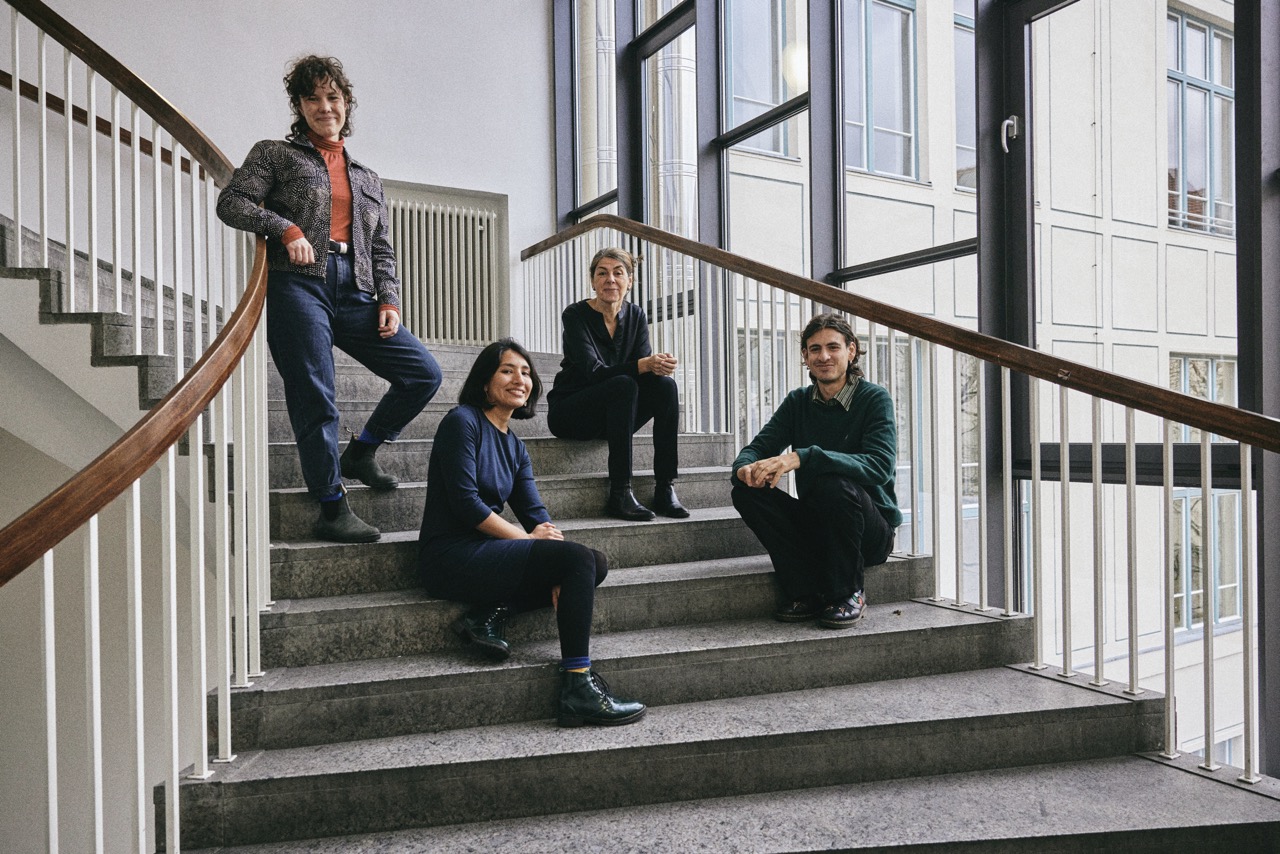
In 2025, four Indigenous anthropologists, namely João Paulo Lima Barreto, Rosijane Fernandes Moura, Jaime Diakara Moura Fernandes and Silvio Sanches Barreto, all from the Upper Rio Negro region in Brazil, and myself, a social anthropologist at the Institute of Social and Cultural Anthropology at LMU Munich, met regularly in Manaus to jointly conduct a research project entitled „Nosology and Sustainability“. This project is affiliated with the Planetary Healing-Project and explores Indigenous healing knowledge in relation to environmental issues and the body. While we had extremely stimulating discussions in our working sessions, the Indigenous colleagues also contributed written texts on different aspects of the subject matter. In one of our sessions, we discussed the notion of omerõ, which translates as „power of the word“ in Indigenous storytelling. Our discussion evolved around cosmology, ritual, colonial history, and the neo-colonial present in Northwestern Amazonia. In this context, the following text of Rosijane emerged and stood out as an autobiographical contribution elaborating on the (neo)colonial entanglements in relation to the mastery of different languages and languages codes. The text provides the story of a traumatized child who had stopped speaking altogether but then managed to become an outspoken activist and anthropologist. While this text engages with the emotional burden of colonial injustices, it moves beyond suffering and pain. It highlights ways of healing colonial wounds, extending from the individual to the political sphere.
I am daughter of many worlds …
I am daughter of many voices …
I am history of many women …
I am vestige of many pains …
But I am also happiness …
I am pride …
I am hope …
I am resistance …
I am woman marked by many scars …
I am not just one woman
I am woman of many spaces
I am woman of many occupations
I am daughter of Maracajá …
Tᵾóñariyõa mahkã
Community I am thinking of
Daughter of the Black Waters
Woman of many nations
I am daughter of Elza Moura
Wirõ mahkõ,
Drean of Antônio Moura,
Dahsi’i mahkõ
I am Dipéporõ,
I am Dahseo.
I am a life of two worlds. This is how I introduce myself to you. My body resides within this intricate web that shaped me. I am not the rule, nor am I the exception; I am merely a single grain among many nations. I am part of a gaze. I am a small part of a great pain—a pain that hides behind a smile, behind the paint adorning my body and face. So that you may attempt to understand who—and what—this Indigenous female body of the 21st century truly is, I share with you my humble story. It is a story that belongs not only to me, but one that could belong to other women as well—women who have endured similar experiences. It is a story etched in the sweat of countless mothers who gave of themselves so that we—Indigenous women in academia—could stand here today: writing, hosting discussion circles and lectures, or even traveling beyond the borders of our territories to tell our story. It is a story in which we are the authors—no longer mere objects, no longer fabricated images, and certainly no longer mere stereotypes. We are the many nations that together constitute the Brazilian nation, and my story forms an integral part of this multi-nation.
I will share with you a bit of the story that I have already told in seminar presentations, discussion groups or even in short articles and hallway conversations. I will share moments that I do not remember myself, but with the help of my brothers and my mother, and with what I always heard during everyday conversations, such as leaving the community and starting school, I will share with you those moments that I did not understand as a child. I will also share my entry into university and graduate school, and finally my experience in becoming a member of the Indigenous Women’s Network of the State of Amazonas—Makira E’ta, an institution that contributed greatly to my professional and especially personal growth
Some parts of this sharing may be a bit longer, and others a bit shorter, because certain moments were far more pivotal in my life—moments that influenced me to become the person I am today. It is not that the shorter passages failed to contribute to the choices I have made in my life; rather, it is simply that I feel it is important to bring the more difficult moments to the forefront, in order to demystify the lives of Indigenous peoples—to show that they do not revolve solely around the community, the fields, and origin stories.
This text may resemble a short diary, but my intention is for you to feel and imagine every episode of my life—every moment, every tear, and every pain. I want you to move beyond the image of Indigenous women often portrayed on social media—where everything appears so perfect—and instead become part of a reality that still exists today in São Gabriel da Cachoeira, the capital of Indigenous peoples.
The Choice of the New Way
I was born in the Maracajá community, located on the Tiquié River in the Pari Cachoeira District, within the municipality of São Gabriel da Cachoeira, in the state of Amazonas, Brazil. I am the middle child—one of five—of Elza Maria, who belongs to the Dessana family. I am an Indigenous woman, 1.54 meters tall, with jet-black, straight hair and a contagious laugh—a trait that seems characteristic of the women in my community—where the high-pitched peal of laughter is often cut short as shyness once again takes hold. I am a woman of sturdy build—small in stature yet strong—a common characteristic among the women of this region; while most here are not tall, they possess incredible strength, having carried aturás (baskets woven from vines and climbers) filled with cassava since childhood.
Her hands today are slender and delicate from a lifetime of hard work—bearing many scars from knife cuts, from scrapes against the manual cassava grater, and even from the loss of a fingertip to the motorised grater, now widely used within the communities. She carries upon her body the scars she earned from life in the community, and within her heart, the scars of change, of loss, and of the daily struggle to forge a new way of life. Here, I share with you a glimpse of my departure from the Maracajá Community for São Gabriel da Cachoeira—a memory that today feels more like a fleeting flash, yet remains vivid in my senses. For I grew up listening to—and being constantly reminded of—my roots and the kind of man my father was; thus, I share here the story of this woman’s struggle to pave the way for our (my siblings’ and my own) entry into a new life.
After losing her husband on December 12, 1995, she decided to make a major change in her life; she wished to fulfill the dreams of her late husband. I dare say that this dream is pursued by many Indigenous people—an ideal of life embedded within their communities: the ideal of a “better life.” It is a dream that many seek to realise—Indigenous people, Black people, and members of minority groups alike. It is the pursuit of so-called “education,” which was expected to provide employment and a “life of dignity.” What an irony of life! For today, Indigenous knowledge holds the key to our continued resistance in a world grappling with climate change. Could it be that the way of life practiced by these communities has now, in fact, become a “life of dignity”?
Ultimately, it was with the aim of seeking a better life that my mother, in 1996, brought us to live in São Gabriel da Cachoeira; for living in the community—without a husband to assist with the heavier physical labour and other chores—and given the state of her health (being pregnant) at the time, was simply not feasible. Furthermore, my mother recounts that following my father’s passing, my grandparents planned to “give her away” to another husband. I imagine you may have read in various studies that Indigenous women were “given away” to their husbands following marital agreements. Yes—in a sense—that is precisely what happened to my mother.
She attended a boarding school, like so many other girls, but at age 17 she was taken out, and the following year she married my father, Antônio—my grandmother’s nephew. It was my grandmother who looked after the family; she was the one who had the final say. My grandmother had been upset because my mother’s older sister had gone to work in São Gabriel, ended up getting pregnant, and returned to the community with her child—a fact that was considered shameful by the elders. My mother recounts that, even against her own wishes, she obeyed her parents’ will. My parents remained together until two years after I was born, and they shared a good life together. When she remembers my father, my mother speaks with great affection of the nine years she spent by his side and of what a good person he was. I believe those years encouraged her to make a difficult decision: to leave her land, her home, her parents, and the very place where she was born, grew up, and got married, in order to start a new life.
I believe that change brings with it many fears, many questions, and many challenges—and for my mother, it was no different. She was a young woman of 28 when she became a widow; she relied on my father to communicate in Portuguese, because whenever merchants arrived in the community—or whenever they travelled to the city—it was he who handled the shopping, or she was always accompanied by him. Thus, communication became her greatest fear and challenge. Well, we are speaking of 30 years ago; for although the municipality is today recognised as the state capital of Indigenous peoples—in accordance with Law No. 5,796, sanctioned by the Governor of Amazonas, Wilson Lima, on January 12, 2022, and published in the Official State Gazette (DOE) of Amazonas—it was not always this way.
At that time, Indigenous languages were spoken in hushed tones, and some people felt ashamed to be overheard speaking them in public spaces such as town squares and streets; moreover, the use of Brazilian Portuguese was mandatory in commercial establishments, as the merchants in the region were not native to São Gabriel da Cachoeira. Some were prospectors who had arrived in the region in search of minerals; others were merchants who had settled there; and there were also those who had served in the military, raised families in the city, and remain there to this day.
On some occasions, there were relatives working in government institutions who assisted my mother; however, it was still difficult for her to face and live this new life. She endured it with great pain, and I recall the nights she would weep in silence, gently stroking our hair and faces. When she did this, one could hear her stifled sobs, the prayers whispered under her breath, her pleas to the heavens, and—at times—the rumbling of her stomach from not having eaten enough. Today, knowing what it is like to be a mother myself, I understand that her tears were not for herself, but for us—her children. That is why she strove so hard to learn to speak Portuguese and to remain in the city.
Like many other Indigenous women of her time, lacking the necessary level of formal education, she went to work as a domestic servant in the residential areas inhabited by military families. Today, in São Gabriel, there are still Indigenous women who provide domestic services in these neighbourhoods. Her income was derived from the days she spent weeding yards, doing laundry, cleaning houses, and performing other such tasks. At the time, the pay was roughly five reais—give or take—for each house where she worked; by the end of the day, this amounted to fifteen reais daily, or even less. She did her utmost to save money and avoid dipping into her earnings; consequently, she often drank only hot water so as not to inconvenience her employers, and she would save her lunch so that, upon returning home, she could prepare a soup for all of us to share for dinner. On the best days, payment came in the form of discarded clothing, a few kilos of non-perishable food items, or leftovers from lunch. On those days, it felt like a shopping trip to us—a chance to add “new” clothes to our humble wardrobe.
On some nights, my mother’s brothers would arrive drunk; sometimes my brother—the son of my mother’s eldest sister, whom we considered one of our own—would accompany them. They didn’t live in São Gabriel, but whenever they came to town, they would stay at our house. On those days, we were terrified, as they would arrive acting aggressively toward my mother, and all of us children were very small. I believe that at the time, my eldest brother was around ten years old, my sister seven, I was about four, and my youngest sister was just one. On those nights filled with shouting and loud music, my mother would gather us up and take us to the open-air court where the Arnaldo Coimbra Gymnasium stands today. There, we would play tag and hunt for lost coins until we grew tired and lay down on the cold concrete steps. I remember how bitterly cold it was, and I could hear my mother weeping quietly to herself. We would wait there until it was time to return home—at an hour when we assumed my uncles would be asleep.
At that time, we could not imagine what my mother was enduring and facing—for alcoholism remains a persistent issue within families in São Gabriel. Beyond the alcoholism that has been on the rise within our communities, my mother faced other forms of violence—such as sexual and psychological harassment from her employers—as well as the risks she ran with taxi drivers while walking alone to and from work. This was a risk that we, as children (and girls), also faced—in addition to the bullying we had to endure from our classmates, and sometimes even from teachers who had come from out of state—an episode I will share with you shortly.
Maria is a very common name in this city—and in many other places—for, much like her name, she stands as a representation of the many Marias who have suffered and struggled to provide a better life for their children. Black Marias, Indigenous Marias, Marias from the favelas, from riverine communities, from quilombola settlements, from the sertão, and from the various marginalised spaces that make up this country. Marias who decided to seek a new destiny—a new story to be built, to be written, and to be faced. Of course, never forgetting the roots that nourish the strength behind this choice.
This is how this Dessana woman faced challenges and paved the way for the beginning of my journey as an Indigenous woman researcher. Her name is Elza Maria—a woman of whom I am proud and from whom I draw inspiration every day; a woman I simply could not fail to acknowledge here, for she is the very source of my knowledge and of what I now share with all of you. She is the woman who taught me what it means to be an Indigenous woman living in the city—to respect my body and our ancestral knowledge. She taught me to respect my people and my origins, and, above all, to value our elders and the living beings that surround us. She taught me to learn the history of this land we inhabit and to embrace my place within it.
Entry into the New World
I believe that, through the teachings of my mother and those close to me, I gradually learned what it means to be Indigenous—something that felt entirely normal to me, given that the people around me were themselves Indigenous. Leaving home to bathe in the dark-hued waterfalls that cascade through the city of São Gabriel da Cachoeira was—and remains—a very common practice during late afternoons and on weekends. The imagery of children leaping from trees and rocks to bathe in the river, of women carrying basins filled with laundry and dishes, and of men returning from fishing expeditions captures the essence of life within the community—a way of life that remains just as present within the city itself. In reality, however, this perspective risks romanticizing that simple life, overlooking the very real challenges faced by these children who dive into the waters not merely for leisure, but to sustain themselves and to nourish their Indigenous core. Not that these moments in life are any less significant—for it is precisely these fond memories that strengthen us and affirm the value of our way of life. Nevertheless, this beautiful memory—one I, too, hold regarding my time living in the city—fades into the background when set against my memories of school life.
In February 1996, I left the interior region along with my mother and siblings to settle in São Gabriel da Cachoeira. The following year, we attended an improvised little school, as local neighbourhood representatives aimed to establish a preschool. In 1998, I attended yet another makeshift school—this one constructed of thatch and wooden planks—where we would sit and have to find a way to make ourselves comfortable. Much like the home I lived in, on rainy days it rained far more inside this improvised schoolhouse than it did outside, a fact that starkly demonstrated the precariousness of the facility. When it rained, water droplets would fall onto my notebook; however, on sunny days, the thatched roof provided coolness and relief from the intense heat.
After that period, I was transferred to a new school called Thiago Montalvo. I should add that, even though I was attending school, my mother continued to teach me at home whatever little she knew. According to my mother, I remained at this institution for one year. That year was full of challenges, for at that time, having Indigenous blood—and even more so, being a speaker of an Indigenous language (in my case, Tukano)—brought with it a deep sense of insecurity. In the other provisional schools I had attended, my classmates were just like me: children hailing from local communities, each speaking their own mother tongue. Their skin tone—much like mine—was a lighter shade of brown, bronzed by the sun; they had straight hair, shy smiles, and a shared curiosity to learn about the other people surrounding them. Back in preschool—and I believe I am still this way even today—I would always ask my classmates which Indigenous community and people they belonged to. You might be wondering how I communicated with my classmates if we came from different peoples. In São Gabriel, members of the Tukano linguistic family—even those belonging to other distinct peoples—are speakers of the Tukano language; for instance, the Piratapuia Indigenous people speak Tukano, though there are also those who speak other Indigenous languages. One could say that Tukano serves as a lingua franca for the region, which is why there were people who could understand me.
Being around children just like me gave me the confidence to share my experiences, our home routines, the stories of our peoples, and the rules our parents had taught us. These moments were crucial for us to feel safe, welcomed, and truly part of the environment in which we found ourselves. It is worth remembering that we were all navigating a relocation and learning a new culture—a process we found very challenging; thus, having people like ourselves going through that same learning process gave us the mental fortitude we needed to keep moving forward.
However, at the Thiago Montalvo School, the attitudes displayed by my non-Indigenous classmates—as well as by the Indigenous students who were native speakers of Brazilian Portuguese and had been born in the city—made the transition to this new environment far more difficult for a five-year-old child. The bullying inflicted by my classmates eventually escalated to the point of physical aggression. Whenever the teacher had us repeat the vowels, my Tukano accent was very pronounced and would elicit laughter from my classmates, leaving me deeply embarrassed. In reality, I understood what the teacher was teaching in class, and my writing skills were adequate; however, mastering pronunciation without an accent was something I still needed to work on, as that was precisely the reason they tormented me.
Once, while I was eating soup made with noodles and small pieces of chicken, one of my classmates spilled the soup all over me, claiming that “Indians” ate with their hands. On another occasion, one of my classmates pierced the skin of my arm to verify whether I was “real human”; from that episode, I bear a scar on both my body and my memory. At other times, they would yank at the ponytail hairstyle my mother had done for me. Phrases such as “licked-by-a-cow hair” and “smells like fish fry” were commonplace.
That was a difficult time; I faced prejudice as well as physical and psychological violence. There were also teachers who simply did not know how to handle a child who spoke an Indigenous language. I recall that my cousins would speak to me in Portuguese, and I would answer them in Tukano; immediately, they would turn around and repeat the very word I had just spoken. I couldn’t tell if they were teasing me or if they actually wanted to learn to speak Tukano. A sense of shame would grip me tightly every time they repeated the words and phrases I had uttered. Amidst this tangle of emotions—fear, shame, embarrassment, and pain—a decision was made, albeit involuntarily: I abandoned the Tukano Indigenous language so that I might be “accepted” in that environment.
That involuntary decision cocooned me into a shy, insecure, self-conscious, and passive child. This child did not speak Portuguese—much less Tukano. How, then, did I communicate? Solely through gestures—simple nods or shakes of the head for “yes” or “no.” Inside me raged a tremendous confusion, filled with questions I could not grasp, yet I knew that the source of my suffering lay in language itself. I do not recall precisely how long I went without communicating verbally, but my mother says I remained silent for a little over a month. During that month—a period that, to a child, feels like an eternity—I devoted myself to observing how my cousins articulated the sounds of words. At school, I would hide away and observe the sounds, repeating them in my mind and whispering them softly until I felt confident enough. Once that period had passed, I spoke exclusively in Portuguese—at school, at home with my family, out on the street, and so on. Tukano became, for me, a purely auditory language—one that I could hear and fully comprehend whenever my mother and brother spoke to me, yet one in which I never engaged in dialogue with them.
In 2000, to continue my studies, I transferred to a new school where I completed grades one through four of elementary school. At this school, I learned the Nheengatu language, as there was a language revitalization project in place. However—in my understanding, at least—the language had been created by the colonists to serve as a common tongue (between invaders and Indigenous peoples) and was being disseminated by the church within the school so that the students would learn it. After all, the school was named Dom Bosco; thus, to me, they were merely doing what was written in the history books. For this reason, I dedicated myself only to learning enough to earn good grades, rather than truly internalizing the language—especially since I had already been made to abandon my own mother tongue.
From 2004 to 2007, my schooling took place at Colégio São Gabriel. My time there rekindled within me the drive to discover new languages, to appreciate their importance in a people’s culture, and to seek to revive my own language. It was during this period that questions regarding the abandonment of my mother tongue began to emerge. Assignments in subjects such as Portuguese Language, Geography, History, Arts, Religion, and others consistently sought to address the importance of the Indigenous culture of São Gabriel da Cachoeira. All of this was a direct result of Law 145/2002—enacted on December 22, 2002—which officially designated three Indigenous languages (Tukano, Baniwa, and Nheengatu) as co-official languages of the municipality (Brazilian Repository of Linguistic Legislation). Although I belong to the Tukano ethnic group, I had limited contact with its people during my school years and, consequently, possess little knowledge regarding them. The Dessano people formed the foundation of my upbringing, as my mother and grandfather—the relatives with whom I had the closest bond—belong to that group.
Gaining admission to the Federal Institute of Education, Science, and Technology of São Gabriel da Cachoeira was a dream realised by few, as it required passing a competitive selection process. This great dream became a reality when—out of many applicants—I was accepted in third place, a source of immense pride for my mother. It was at this institution that my horizons broadened; for the first time, I was surrounded by other Indigenous people like myself, and there was a strong emphasis on cultural empowerment, as the institute provided funding to schools that promoted the city’s local languages and culture. I gained invaluable experiences there—such as participating in events where my Indigenous knowledge proved absolutely crucial. On these occasions, I fostered my personal, social, and cultural identity, as I had the opportunity to share the knowledge I possessed regarding the cuisine and the historical sites associated with the Dessano/Tukano people—stories my grandfather used to tell—thereby reinforcing my self-confidence in being Indigenous.
Cultural Reconstruction
The co-officialisation of languages within the municipality brought significant prominence to the city in national and international media circles, as well as in the eyes of the federal government. As a result of this co-officialisation, schools—both in the interior and at the municipal seat—along with public spaces, began to actively feature all three languages. Speakers of any of these three languages were afforded the opportunity to work in the public sector, serving both the local population and the foreign visitors eager to discover the first city to grant co-official status to Indigenous languages alongside Portuguese.
In 2014, I took the entrance exam for a Licentiate degree in Portuguese Language at the State University of Amazonas. The undergraduate program was delivered via IPTV, and Assistant Professor Edilson Martins, M.Sc., played a pivotal role in fostering linguistic self-discovery and cultural appreciation. During his time as an assistant professor, he taught us the importance of valuing our culture—a value I now recognise as absolutely essential to our identity. This encouragement was deeply significant, as I believe that the majority of students in the program may very well have travelled that same path of denying their own origins.
Therefore, having a teacher who teaches us to value those around us, like my grandfather, Diakuru, who is the author/narrator of the book Desana The Sacred Mythology of the Desana-Wari Dihputiro Porã and Bueri Kãdiri Maririye: The Teachings that are not Forgotten, which are part of the Collection of Indigenous Storytellers of the Upper Rio Negro – FOIRN, is essential for self-confidence and the search for rebirth as an Indigenous person. Therefore, it makes us recognise that those stories, which at the time were just stories to me, are the life of a people, the origin of existence, the sacred, preservation.
Given the magnitude of the incentive, a course in the Tukano language was launched within the university, taught by Professor Edilson—a member of the Baniwa people who also possessed expertise in the Tukano language. The course attracted a large number of students; however, it failed to take into account the linguistic variation that exists within the Tukano language itself. Due to this linguistic variation, there was considerable debate regarding “correct” orthography as well as ideal pronunciation. Throughout the course, some individuals asserted that their particular way of speaking was the correct one, while others—who belonged to the Tukano people—claimed that „their“ way was correct by virtue of being the “true” Tukano speakers. This discussion remains a lively issue today; consequently, one can observe that the language appears written in one form in certain scholarly works, yet in a different manner in more recent literature. Indigenous researchers who have entered academia have begun to join forces in an effort to reach a consensus on orthography.
Throughout the course, many professors taught us—such as Professor Kigenes Simas (M.Sc.) and Professor Zilma Henrique (M.Sc.)—who were also essential and inspiring in helping to shape research ideas. Thus, my personal experience served as the source of inspiration for investigating the potential factors contributing to the devaluation of Indigenous languages within the school context. This led to the research project titled “Reflections on the Tukano Language in the School Context in the City of São Gabriel da Cachoeira, AM,” which culminated in a final thesis titled “Challenges of the Tukano Language in the Irmã Inês Penha and Sagrada Família State Schools,” supervised by Professor Edilson Martins (M.Sc.). During the research, it was observed that families exert the greatest influence regarding the linguistic shift occurring among adolescents and young adults in the municipal seat of São Gabriel da Cachoeira, AM.
The research conducted during my undergraduate studies answered several personal questions that had remained unanswered for years; however, another question arose: What can be done to aid in the preservation of Indigenous languages among migrants moving from the interior to the municipal seat of São Gabriel da Cachoeira? This question served as the starting point that motivated me to apply to the Graduate Program in Social Anthropology, with the aim of investigating the factors driving Indigenous migration from their communities to the city, as well as continuing to promote initiatives for the preservation of Indigenous cultural identity among adolescents and young adults.
Although the revitalization of Indigenous languages was the central focus of my undergraduate research, upon entering graduate school, the need to investigate a different theme took centre stage. This need arose from the scarcity of literature written by Indigenous women from the region—works in which they could bring their own experiences within their communities to the fore.
The central focus was to contribute to the field of anthropology through research examining the appreciation of Tukano Indigenous culture from the perspective of Indigenous women, and to join forces with other Indigenous and non-Indigenous researchers. Beyond this contribution, becoming the voice of Indigenous women—who, like my mother, never had the opportunity or were compelled to abandon their studies out of obedience to family tradition—became the mission of my work as a researcher in the field of anthropology, a domain in which men typically hold greater prominence.
Struggling with Non-Indigenous Science
Entering the field of Anthropology meant discovering how the literature viewed us—as Indigenous bodies: Indigenous people of the past, of the present, and as researchers. Anthropology taught me to pause, observe, and reflect upon my life and the lessons my mother and those close to me imparted as I grew into womanhood. It also taught me that gaining admission to graduate school is not a privilege, but a hard-won achievement—one secured by those who came before us and blazed a trail for others to follow. There are those currently striving to gain entry; there are those who have entered and are now fighting to have their knowledge recognised—insisting that it not be written solely through the lens and frameworks of others—or simply fighting to maintain their mental stability. Being within the realm of graduate studies means fighting for one’s ideas and writing from the standpoint of one’s own lived experience—making it understood that the lived experience of an Indigenous body is Indigenous science.
To begin, I recall the various non-Indigenous researchers who used to visit my home in search of my grandfather, Américo Diakuru—a member of the Dessano people who passed away in 2020. I could not understand why, every single time, they would arrive armed with notebooks, tape recorders, and endless questions: questions about traditional healing practices, about our people’s origin stories, and inquiries regarding the histories embedded within the landscapes that make up the city of São Gabriel. Whenever they arrived, they wanted to take part in our daily chores—to accompany us to the fields, on fishing trips, during meal preparation, and throughout our everyday lives. Come the month of June, the researchers would invariably appear at our doorstep; and whenever that month rolled around, our immediate thought was of the nuisance it was to have them trailing us and peppering us with so many questions. At that time, we were living in a new home—one that my mother had acquired through immense effort.
The month of June or July was the school break. I remember it seemed long, probably because we went to the garden and had to work on the cassava plantation. However, there were also wonderful moments, like when we went fishing, canoeing, jumping from trees, or climbing trees to pick fresh fruit. I miss those days. The vacations were no different from the weekends when my mother would take us to the garden. However, it was the ideal time for my mother to spend more time with us, teaching us about how to plant and tell us stories about the origin of the garden and of cassava, as well as teaching us to recognise medicinal herbs, roots, and vines. At night, we would all lie in our hammocks and listen to stories about the first Tukano women, about other beings, and about the journey in the canoe of transformation, the latter of which is well-known to anthropologists who study the Rio Negro region
I recall these moments so that we may reflect together on the fact that when a non-Indigenous person visits an Indigenous territory—or experiences life within an Indigenous community—and reports on that experience, their account is accepted by academia with little to no questioning. However, when it is an Indigenous person reporting on their own lived experience or knowledge, there are still those who question their manner of writing and expression. At other times, it is the academic advisors who seek to dictate what we should record and share with the academic community—and, quite often, this does not align with what we ourselves wish to pursue.
When we enter academia, we do so with the expectation that our knowledge will be respected and recognised—that it will be accepted exactly as it is written, and that our distinct approaches to conducting research will be acknowledged. Academia is not easy; beyond the established requirements—such as proficiency in foreign languages (English, Spanish, French, etc.)—we must also “make do” within our coursework, navigating texts written in Spanish or English that pertain to Indigenous peoples. Furthermore, there are those professors who dismiss the struggles of Indigenous researchers—specifically their difficulties with writing or expressing themselves in Portuguese—as mere “fussiness” or “playing the victim.”
This is not an act of victimhood or an excuse for the outcome of my research; what people do not realise is that, for me, it was incredibly difficult to grasp the nature of Anthropology—and I confess that, even today, I still do not fully understand it. I never imagined that leaving São Gabriel would transform me—and I am not referring to the people I met or the experiences I underwent. Leaving the town where I grew up demanded a process of readjustment—an adaptation to our way of life. The cuisine I had access to in São Gabriel is found only with great difficulty in Manaus; even simple acts—like sitting out in front of the house or chatting with neighbours across the wooden fence—have become moments steeped in nostalgia.
Academic demands have turned me into an anxious person—someone who now suffers from insomnia and migraines, and who longs for the days when I would sit on my home’s porch or head out to the fields. These were moments that, at the time, felt like a struggle, yet today evoke a deep nostalgia for the simplicity of those days. Now, I sit in front of my laptop, or I must read book after book just to write in accordance with academic requirements. I spend my days and nights reflecting on the teachings passed down by my mother—themes that I now explore within my anthropology studies. To be honest, I miss lying back and swaying in a hammock after a long day in the fields, listening to stories about my people and about the women who defied the rules regarding the care of the body. I miss reflecting on—and feeling the fear of—that disobedience. I miss being able to sleep without my mind racing over articles, books, theses, and all the other things on which academia forces us to become dependent.
Being at the university makes us sick. It demands psychological strength and all the blessings that can take care of our spirit. Yes, after I started my postgraduate studies, I had to return to São Gabriel because I had panic attacks, I was unconscious from psychological exhaustion, I felt the urge to scream for help, I cried many times, and I didn’t know why. My body needed to reconnect with the earth, with my territory, and this is not a myth, a tale or a cosmological story of Indigenous life.
It is deeply distressing to constantly have to justify our knowledge and struggle to have it recognised as science—or to see the term “traditional knowledge” applied exclusively to the wisdom of Indigenous peoples. We must demand respect for our Indigenous bodies; for when it comes to us, there are still those who treat us like “pets,” “mascots,” or “tagalongs”—finding it convenient to know an Indigenous person only to gain access to certain spaces or to “show us off” in front of other non-Indigenous researchers. I still observe Indigenous researchers relegated to the role of wards under the tutelage of their academic advisors, who rewrite their research—and their very history—to align with the “guidance” they are given. I am telling this because I played this role myself until I understood that the history I would like to record should be decided by me. The research I would like to contribute to my people, to the recording of this knowledge and to the updating of information about our life and our way of being.
In the past, anthropology was known for studying peoples who were supposedly on the verge of extinction. But now—with Indigenous researchers participating as authors of this anthropological writing—how does anthropology respond to these bodies? Does it simply involve adding the prefix “ethno” to everything related to Indigenous knowledge written by us?
Empowerment of the Women’s Network
The city of São Gabriel da Cachoeira is known as the capital of Indigenous peoples; indeed, I would venture to say that it is the cradle of the Indigenous movement and holds significant representation within the movement in the state of Amazonas. However—even though I hail from this very municipality—I never had any contact with this Indigenous activism. I went through life seeking acceptance and striving to fit into a Eurocentric mold—endeavouring to master the Portuguese language, to express myself articulately, to read the literature, and to fulfill every requirement demanded of us in order to belong. My quest was driven by a desire to ensure I would never again experience the same pain and emotions I felt as a child.
In the year I began my graduate studies, I met several people who belonged to Indigenous organizations representing Indigenous communities at the state, national, and international levels. Among these individuals was Perpétua Cerqueira—an Indigenous woman from the Solimões River region, a member of the Kokama people—who, like myself and other Indigenous women, had endured a very arduous life journey filled with challenges as she fought to preserve her knowledge and sought to reclaim her heritage.
After the end of social isolation due to COVID-19, I met Perpétua in person—a woman of small stature, yet strong and full of life. As I have mentioned before, whenever I meet an Indigenous person, I ask about their people, their Indigenous name, which region of the state they come from, what life is like in that region, and their favourite foods—essentially anything that might help me connect with their community. Above all, I aim to serve as a source of support, ensuring that this fellow Indigenous individual feels safe, welcomed, and encouraged to openly identify as Indigenous. Her Indigenous name is Suni, and that is how our friendship began. She is a Kokama woman who, along with her family, had to live in hiding among the Tikuna people to preserve their culture and way of life. According to Suni, during her childhood, they lived among the Tikuna strictly as a means of survival.
I hold in my mind this small yet strong woman, for it was through her that I came to know the Network of Indigenous Women of the State of Amazonas—MAKIRA E’TA. This Network serves as the representative body for Indigenous women at the state level in Amazonas, with the aim of fighting for the rights of each individual woman within her own territory. However, I would first like to share with you how it was that this woman introduced me to the Network. One day, while I was at home, I received a message from Suni inviting me to join her and attend a meeting. Since the period of social isolation had come to an end, leaving the house—meeting new people and being able to converse in person—was something my body truly craved. Consequently, I accepted the invitation without even asking where the meeting was taking place or what its purpose was. Upon arriving at the venue, I understood absolutely nothing about the conversation taking place—it was something about a march, about food, a venue location, travel arrangements, and a host of other things I knew nothing about. In short, they were discussing the upcoming event for International Women’s Day, as well as the Collective Resurgence of the Indigenous Movement in the State of Amazonas.
On that day, I met Maria do Socorro Elias in person—a Baniwa/Tukano woman, as she identifies herself. Bearing the Tukano Indigenous name Ye’parió, she serves as the coordinator of Makira E’ta. She is a woman of firm resolve, strong-willed, and fierce—yet, as she herself describes it, she is a woman of “recent contact” with her Baniwa culture and with the Indigenous movement. She embodies the woman who is, day by day, learning what it means to be an indigenous woman; for her body bears the marks of colonization—marks that have given her the outward appearance of a brusque woman, though this is merely a protective armour forged by the myriad challenges she has had to face. This woman—who describes herself as being of “recent contact”—represents the many other women who are also in search of their identity and their culture, seeking to relearn and to rediscover themselves through the sharing of experiences with other women—women who teach us how to inhabit this Indigenous body and how to fight for our rights.
I identify deeply with these two women whom I present here—women who have contributed to my personal growth as an Indigenous woman. I used to lament not knowing my people intimately, as well as all the hardships I endured during my childhood. However, upon meeting them, I realised that I was not alone in my experiences; many other women had walked that very same path and had worked to transform that journey for the new generation. Consequently, I began to ask myself: What am I doing to ensure that the new generation embraces their Indigenous identity with pride?
Despite hailing from a city that plays a leading role in Indigenous activism, I had never been involved in social organizations fighting for Indigenous rights. In truth, I had no interest in the matter, as I believed it held no importance for me—that it would add nothing to my life—without even realizing that I was living amidst the very achievements of those individuals dedicated to the preservation and revitalization of each culture. Consequently, when I was invited to join the network, I felt a sense of purpose, for I was able to share my mother’s teachings with other women. Through the network, I had the opportunity to discover many other communities, cities, and Indigenous peoples throughout the state of Amazonas and across Brazil.
Through projects coordinated by the network, I shared experiences with and contributed to other Indigenous peoples, and gained a new perspective on my own region. This is because people from outside the region often assume that everyone hailing from São Gabriel—or from any other city or community there—must surely know one another and be actively involved in activism. In reality, I was among those who were unaware of what was transpiring within the state sphere regarding Indigenous peoples and their territories—let alone the various associations, networks, and the broader Indigenous movement. It was only after becoming involved in the Indigenous movement through Makira that I began to pay closer attention to the laws, rights, and struggles at play.
After joining the network, I was elected—by a vote—as the second treasurer, alongside Marinete Almeida of the Tukano people. She is a woman who was born in the interior of São Gabriel da Cachoeira and whose life journey has been guided by the Indigenous movement. A mother of four biological children—and many others by heart—she has dedicated herself to making her life a daily struggle for the “good living” not only of her own children but of an entire generation. A speaker of the Tukano language, she has been active in Indigenous student movements, participates in state-level politics, and constantly seeks to contribute through the knowledge she has acquired.
The three women I present here have diverse life experiences: one is a woman who grew up in hiding, living among another people in order to survive; another is a woman who left her community and learned how to navigate—and fit into—this Eurocentric world; and finally, there is a woman who dedicated her life to the movement and the struggle for Indigenous rights. These three women became connected within this network—which, not coincidentally, is named Makira E’ta. In any case, having shared a little about these women—who contributed to my own self-confidence as an Indigenous woman—and having mentioned the term “Makira E’ta” several times, you must now be wondering what it means.
Makira E’ta comes from the fusion of two Indigenous languages, the Nhegatú and Tikuna languages, Rio Negro and Rio Solimões. Makira means Network in the Nhegatú language. E’ta means Star in the Tikuna language. Network of Stars. Networks made up of women who are guiding stars and guide and are the pillars of their communities. Those who were supposedly behind the men, but through these other women a new version of the female story is brought to the social movement. They were involved in the construction of Indigenous rights, and many gave their lives to strengthen the movement within their communities
Some believe that a fluid dialogue exists between the men and women of the movement, but behind the scenes, this is not the case. There is much argument, conflict, and ego at play; for even in the 21st century, there are men who prefer to have the final say and often fail to take the opinions of others into consideration. Nor is it all smooth sailing among the Network’s leadership: there are disagreements, tears, and complaints from husbands who cannot comprehend their wives’ absence from the home. As the Network’s secretary, I interacted with many leaders—both women and men—and hearing about their struggles made me reflect on how much time I had spent lamenting the suffering I endured during my own childhood.
Therefore, the words I took to heart were that, even amidst suffering, one must not give up on who one is. One must not give up on our knowledge. We must take all this suffering and these challenges and transform them into strength, so that the new generation may have a history and a life to preserve. We must not reject colonial scientific knowledge, but rather master it and utilise it as a tool for the preservation, revitalization, maintenance, and enduring presence of Indigenous knowledge and rights.
References
Lei n. 145/2002 – Do Município de São Gabriel da Cachoeira / AM · OBDL. Repositório Brasileiro de Legislações Linguísticas (RBLL) · Disponível em <https://direitolinguistico.com.br/repositorio/s/rbll/item/2#lg=1&slide=0>. Acesso em 16 de maio de 2025.
No AM, São Gabriel da Cachoeira se torna Capital Estadual dos Povos Indígenas. Ecoamazônia. Angência Cenarium. Jan de 2022. Disponível em <https://www.ecoamazonia.org.br/2022/01/am-gabriel-cachoeira-torna-capital-estadual-povos-indigenas/>. Acesso em 17 de maio de 2025.
This project is funded by the LMU Sustainability Fund and led by Eveline Dürr. It collaborates with Andrea Jobst-Heel from the Global Mental Health Research Group at LMU Klinikum. Rosijane’s text has been translated from Portuguese into English by Wolfgang Kapfhammer.
Cite as: Fernandes Moura, Rosijane (2026). Two Worlds to Live In, url: https://www.planetaryhealing.gwi.uni-muenchen.de/two-worlds-to-live-in/