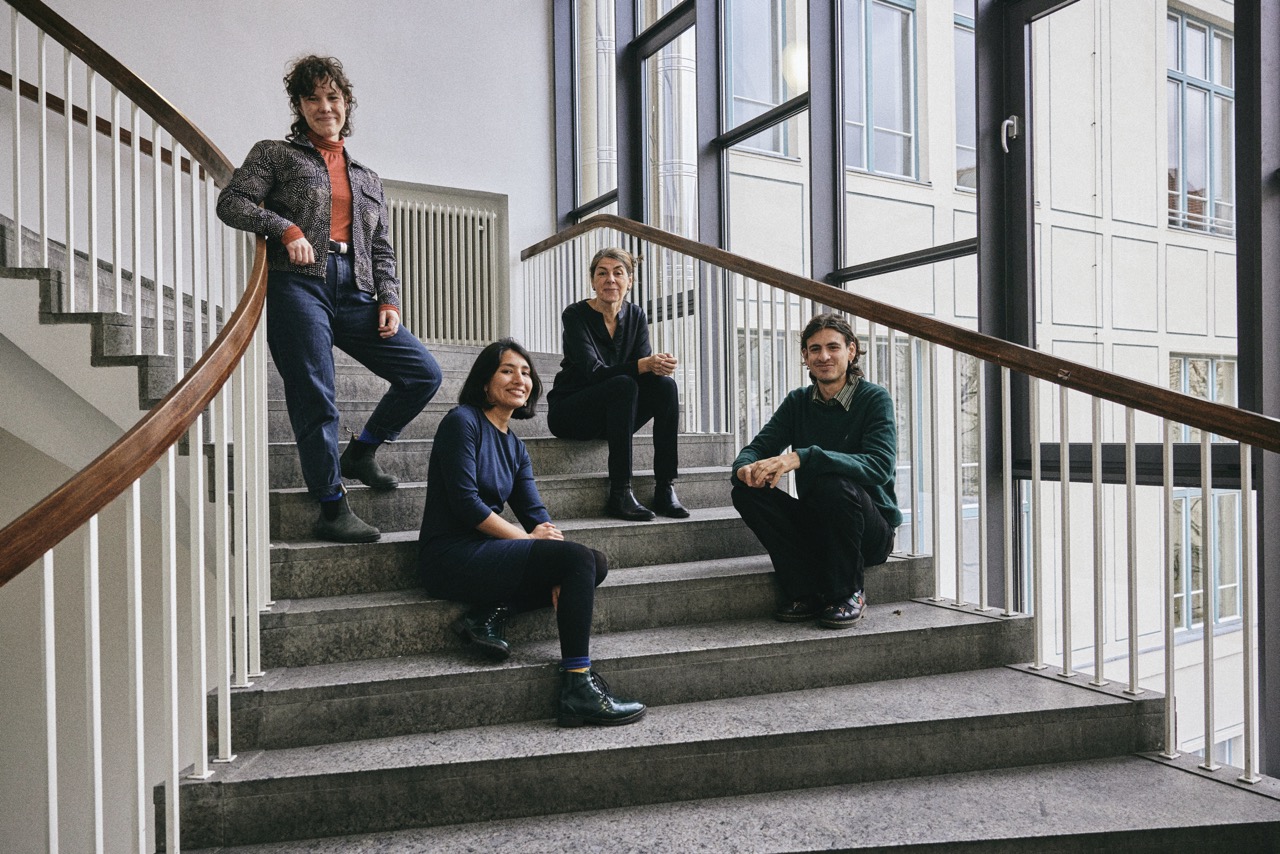
By Markos Panayiotou (LMU München)
This year’s biennial conference of the Society for the Anthropology of Lowland South Americatook place at the University of Helsinki from 4th to 6th of August 2025. The conference was hosted not only by anthropologists of lowland South America but also by local Sámi scholars involved in the Indigenous studies program at the University of Helsinki. This collaboration highlighted important topics, including the ethics of research and the co-production of knowledge with Indigenous anthropologists. The conference opened with a keynote by the Sámi politician and academic Irja Seurujärvi-Kari.
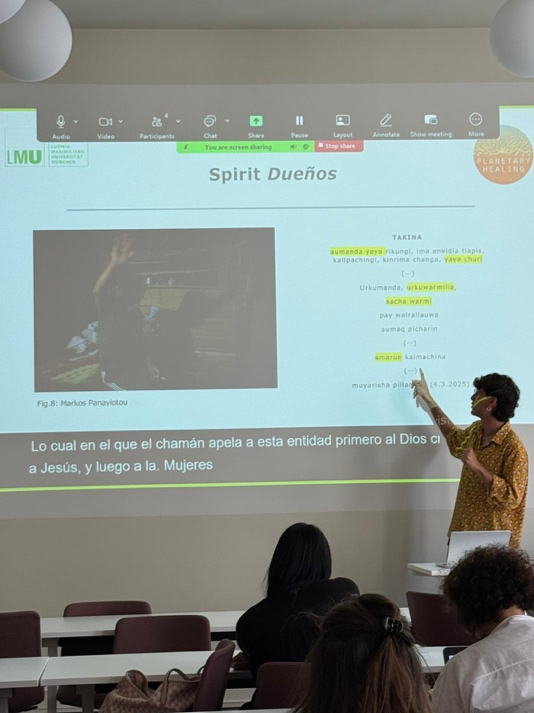
As a doctoral candidate in the Planetary Healing group at LMU Munich,I had the pleasure of participating in the panel “Engaging with Others in More-Than-Human Worlds: Conceptualizations, Relations, and Interactions”, organized by Jan David Hauck (Rachel Carson Center, LMU), Alejandro Erut, and Francesca Mezzenzana (Rachel Carson Center, LMU). In this panel, scholars at different career stages from around the world presented recent ethnographic insights into lowland South America, with topics ranging from food practices to river and land relations, as well as shamanic practices and interactions with more-than-human beings. I had the opportunity of presenting parts of my preliminary research, conducted in Ecuador’s Napo Province, focusing on the fasting practices of Kichwa communities and their entanglements with other-than-human beings.
As the conference focused on collaboration and co-creation of knowledge, the organizers invited Indigenous scholars and artists from across Abya Yala to participate. The highlight of the second day was a performance by a Shuar theater group, primarily consisting of members from Shuar villages located in the Ecuadorian Amazon. The group is dedicated to raising awareness about issues related to ecological destruction and extractivism through theatrical performances of ancestral Shuar stories. Despite the difficulties of obtaining visas to enter the European Union, the group’s membersmanaged to travel to Helsinki all the way from the Amazonian region of Ecuador. Their performance told the mythical story of two entities: the malevolent Iwia, who destroys and consumes everything in their path, and the benevolent Etsa, who restores life on earth.
The conference concluded with a keynote dialogue between Indigenous intellectual María Clara Sharupi Jua and anthropologist Philippe Descola. The speakers talked about the conference’s thematic focus on “co-creation” in the context of research in the Amazon. In the context of ethnographic research, the need for collaboration and alliance-building was addressed. While Philippe Descola theoretically emphasized the asymmetries between anthropologists and their local interlocutors, María Clara highlighted the inherent inequalities in these relationships. The speakers then turned to the theme of “silences”. The primary issue discussed was the ethical responsibilities of anthropologists in the field, particularly when handling sensitive or confidential information. The collaborative framework of the proposed research included moments of stepping back from the field and withholding “secret” information from publication.
Many thanks to the University of Helsinki and the Anthropology Department for organizing such a remarkable conference and for ensuring that Indigenous scholars were able to travel to Europe!
Cite as: Panayiotou, Markos. (2025). ‘Reflections on the XV Conference of the Society for the Anthropology of Lowland South America (SALSA): “Co-Creations and Silences in Amazonian Research”’, Planetary Healing Blog, url: https://www.planetaryhealing.gwi.uni-muenchen.de/reflections-on-the-xv-conference-of-the-society-for-the-anthropology-of-lowland-south-america-salsa-co-creations-and-silences-in-amazonian-research/