By Karla García (LMU München)
Ecuador is one of the many countries deeply entangled in the complexities of extractive systems, where the promise of economic development and Buen Vivir often collide. Emblematic debates—such as the implementation of the Rights of Nature or the referendum to keep oil underground in Yasuní—have drawn scholarly attention as possible responses to the climate crisis. But are these legal innovations enough to support a genuine post-extractive transition? What frictions emerge in the process? My doctoral research is situated within these tensions, seeking to understand the possibilities and challenges that emerge in extractivist contexts. During fieldwork, I connected with the organisation Clínica Ambiental and with Marino[1], one of its members, with whom I reflected on the withdrawal of oil companies. As we observe a complex landscape in territories long permeated by the dynamics of oil companies, we wonder how the disruptions of extractivist activities can be healed in more-than-human environments.
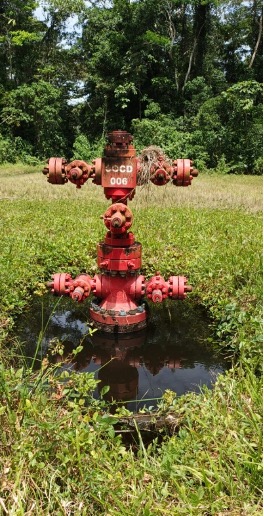
Yasuní and the Withdrawal of Oil Companies
The preservation of the Yasuní National Park has been one of the most controversial and emblematic cases in Ecuador, raising questions about the country’s real capacity for environmental protection. In 1989, Yasuní was declared a UNESCO Biosphere Reserve (Ministerio del Ambiente, 2015) due to its extraordinary biodiversity (Margot S. Bass et al., 2010) and the presence of native forests that are home to more-than-human life.
Yet beneath its soil also lie raw materials that have attracted state and private oil companies for decades. By the late 1990s, it had become clear that the oil frontier endangered the survival of Indigenous groups in voluntary isolation, including the Tagaeri and Taromenani. In 2007, an intangible zone was established to protect them, but it covered only a third of the ancestral territories that these peoples had historically inhabited (Código Vidrio, 2023). Since 2000, violent clashes among communities, oil companies, and colonos (national settlers) have been reported, largely triggered by territorial conflicts (Acción Ecológica, 2023).
It was in this context that the Yasuní-ITT Initiative emerged. Between 2007 and 2013, several stakeholders launched an international campaign to raise funds for conserving the oil reserves of Block 43 (Yasuni-ITT)—approximately 850 million barrels—and thus avoid the emission of more than 400 million metric tons of CO₂ (Andes, 2010). The proposal aimed to raise half of the revenue that oil sales would have generated (Amazonía por la Vida, 2013). However, after only 0.37% of the target was collected, the initiative was terminated. In 2013, former president Correa requested the National Assembly to declare oil exploitation in Yasuní-ITT a matter of “national interest,” thereby authorizing drilling within a protected area (El Telégrafo, 2015). This decision reversed the initiative’s original conservation-oriented approach, institutionalizing extraction as a national priority. Following the National Assembly’s approval, extraction began in 2016.
In response, environmental organisations pushed for a national referendum that, in August 2023, resulted in 59% of votes in favor of leaving the oil underground. The result was celebrated by stakeholders as historic and inspiring. Yet, the implementation has been slow. According to NAWE (the Waorani Nationality), only 10 of the 247 wells have been shut down, and the rest continue operating (NAWE, 2025). Therefore, protests continue, demanding the exit of oil companies.
Challenges of Restoration
Beyond the withdrawal of oil companies, the intricate question is what happens next. What forms of life and relationships emerge in post-extractivist territories? One of the greatest challenges is that, even if the oil companies depart, as expected after the referendum, there is no certain process for reconfiguring broken community relationships or their connection to the land.
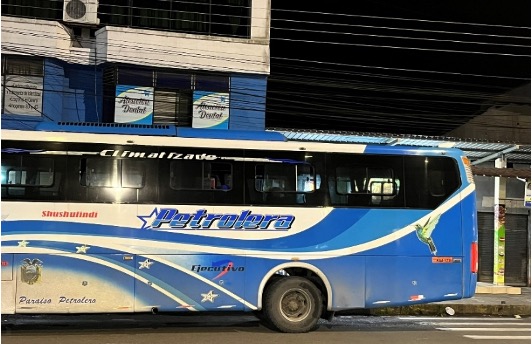
During fieldwork, I often heard locals say that due to deforestation, they could no longer hear the birds or the monkeys, leaving them with a feeling of loneliness. Others pointed towards the chimneys that constantly release smoke, blaming them for skin diseases and cancer. At the same time, the region bears the imprint of the oil industry with companies building roads and sports fields, and even the public buses carry names like La Petrolera—a reminder of how deeply extraction is interwoven with everyday life.
These tensions were evident in the 2023 referendum: in Orellana, one of the provinces overlapping Yasuní, 58% of the population voted to continue oil exploitation in Block ITT (Primicias, 2023). Thus, while Waorani groups protest in the capital demanding enforcement of the referendum, in the territories, many remain fearful of losing livelihoods tied to the oil industry.
In this sense, extraction is inscribed in perception, health and affection. It exceeds the material conditions of drilling to become a lived, embodied condition. It operates simultaneously at the individual and communal level, permeating different geographical and temporal scales. Personal experiences of loneliness, sickness or economic dependence are entangled with broader infrastructural ties to oil companies and with a historical national imaginary of development enabled by oil revenues. These entanglements echo what scholars are exploring in similar contexts, particularly addressing intergenerational trauma and the ways (neo)colonial conditions shape different scales of this harm, but also the possibilities of healing (Dürr and Rohrer, 2022).
In contemplating a post-extractivist context and envisioning their future, it is common to associate a nostalgic sentiment of a bygone era prior to extraction, often idealised as better times, thereby fostering the notion of a potential return to that time. However, this has proven problematic. In ecological terms, restoration has been defined as “the process of assisting the recovery of an ecosystem that has been degraded, damaged or destroyed” (Gann et al., 2019: 57). Even if this concept has been used as baseline for global policy frameworks, it has been challenged in more recent approaches, addressing the absence of a perspective that encompasses the social sciences (Martin, 2017), the incorporation of Traditional Knowledges (Yadav Uprety et al., 2012), and the very conceptualisation of a reference system towards which the recovery is being directed. In Yasuní, for instance, returning to a state before seismic exploration, deforestation, and communities’ entanglement with oil dynamics is not only unrealistic but also raises the question if it is even desirable. As the 2023 referendum results of this region show, many locals have forged livelihoods, infrastructures, and dynamics around extraction activities.
Restoration and Rights of Nature
In 2024, RoN stakeholders launched a training program to strengthen local leaders’ capacities in legal advocacy and territorial defense. This training program rested on the premise that local leaders are best positioned to lead restoration efforts, as they hold ancestral knowledge, understand community dynamics, and can interpret what “nature needs”, as one organiser said. In this context, participants were also confronted with the implications of restoration. Through long debates based on personal experiences and litigation analysis, the idea of return to a prior state was dismissed, instead discussed in terms of responsibility, temporality, and possibility.
Within the Ecuadorian legal framework, the 2008 Constitution grants the right to restoration in Art. 72, apart from the compensation to affected communities. In practice, however, successful litigation has been implemented as forms of reparation, through financial compensation or superficial ecological remediation. Marino, one of the participants, claims, for example, that restoration is often used by oil companies and state agencies as a symbolic gesture, where “contractors plant a few trees and leave”. These efforts erase responsibility while reproducing extractive logics. He also recalls reading environmental impact reports that were copied word-for-word from other sites, exposing both the negligence and the bureaucratic performativity of corporate oversight.
This landscape reflects a broader issue within RoN resolutions, as Kanyama (2025) notes in an analysis of RoN frameworks across multiple countries, indicating that a part of the problem lies in judicial ambiguity surrounding restoration. Courts have been unable to define concrete plans for specific ecosystems, a situation that worsens if we consider climate change (Kanyama, 2025). As a critique of this approach, the concept of restoration was discussed by the instructors and participants of the training program as a more comprehensive process that addresses transgenerational biocultural impacts. That is, not only focused on immediate damage to be repaired but on a long-term impact for future generations.
As a way to kick off this training, several graduate groups developed pilot projects for Yasuní and other territories. These include permaculture techniques applied to the rainforest context, such as climbing long palms to harvest seeds without cutting them, recovering native seeds, designing edible forest systems, using clay and local plants for medicinal purposes, among others. However, bringing these ideas of healing disrupted more-than-human relationships into action, has proven difficult. Both Acción Ecológica, the organisation funding the projects, and the restorers themselves have confirmed that fractured social relations and oil-dependent cultures hinder implementation.
Faced with this ambivalence, Acción Ecológica decided to prioritise restoration projects in areas where wells are already inactive rather than within Yasuní National Park itself. As Marino explains, despite having funding and clear project ideas, it has been difficult to find communities willing to engage. For him, the “clientelist” legacy of oil, as he calls it, remains present, as collaboration is often expected to come with financial compensation.
Possibilities of Restoration
Under the slogan that “health begins in the soil”, the organisation Clinica Ambiental was founded by locals, aiming to restore the territories in the north Amazon region. Many of its members participated in the training program and graduated as community restorers, including Marino.
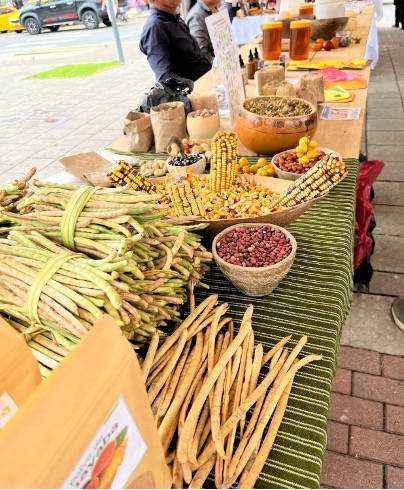
Drawing from his training as a community restorer and over a decade of practice in permaculture with Clinica Ambiental, he approaches restoration as slow work. On his farm, he together with his family have spent twelve years reforesting it with native plants, rescuing seeds, and integrating ancestral knowledge about local fauna and flora. Only recently, he said, have wild animals begun to return—birds, monkeys, and insects drawn by fruit trees planted some time ago. Similar experiences came from other members of Clinica Ambiental, who have used permaculture techniques to plant trees as “roads” for the monkeys or different kinds of plants to interact to each other.
Restoration cannot be subcontracted, claims Marino, it must arise from the people who inhabit and know the territory. Some of the restorers working in the pilot projects imagine it as a pathway towards economic autonomy: communities designing and leading their own projects, demanding state or corporate financing, and replacing external contractors with local expertise. Restoration, in this vision, includes reclaiming agency and dignity. It proposes an alternative economy grounded in care, reciprocity, and coexistence with the more-than-human world.
More than just return
In territories long entangled with oil extraction dynamics, such as the Ecuadorian Amazon and particularly Yasuni-ITT, restoration cannot mean a simple return to a pre-extractive past. Scholars are questioning whether restoration is even the right framework, exploring alternative concepts such as novel ecosystems (Hobbs, Higgs & Harris, 2009) or the potential of transformation for planetary healing (Dürr and Rohrer, 2022), suggesting that the question moves from the recovery of something lost, to the constitution of something else.
From conversations with Marino and other members of Clinica Ambiental, I sensed that their practices already inhabit this shift. Calling themselves restorers, what they describe, and especially practice, is not recovery but a working towards a relational future that does not erase what the territory once held. In other words, their practices aim to address restoration by attending to long-term impacts in the territories. In this context, healing and the possibilities of transformation appear to be implicit rather than theorised. This leaves an open and productive question: how do restoration and healing speak to each other? To what extent do legal frameworks of restoration constitute a practice of healing?
Acknowledgement
A special thank you to Marino and the people of Clínica Ambiental, whose work and reflections made this blog possible.
References
Acción Ecológica. (2023). ‘Paz para el Yasuní’, Acción Ecológica, 21 August 2023. Available at: https://www.accionecologica.org/paz-para-el-yasuni/ [Accessed 13 November 2025].
Amazonía por la Vida. (2013). ‘La propuesta’, Amazonía por la Vida, archived 16 August 2013, Wayback Machine. Available at: https://web.archive.org/web/20130816063637/http:/www.amazoniaporlavida.org/es/La-propuesta/ [Accessed 13 November 2025].
Andes (2010). ‘¿En qué consiste la iniciativa Yasuní-ITT?’, Agencia Pública de Noticias del Ecuador y Suramérica (ANDES), archived 10 April 2010, Wayback Machine. Available at: https://web.archive.org/web/20100410073743/http:/andes.info.ec/tema-del-dia/%C2%BFen-que-consiste-la-iniciativa-yasuni-itt-2901.html [Accessed 13 November 2025].
Código Vidrio. (2023). ‘¿Qué es el Yasuní y la Zona Intangible, territorio de los pueblos no contactados?’, Código Vidrio, 15 August 2023. Available at: https://www.codigovidrio.com/code/que-es-el-yasuni-y-la-zona-intangible-territorio-de-los-pueblos-no-contactados/ [Accessed 13 November 2025].
Dürr, E., Rohrer, I. ‘Planetary Healing: A New Approach to the Challenges of Climate Change’, Sociologus, 72(2), 157-164. https://doi.org/10.3790/soc.2022.1444504
El Telégrafo (2015). ‘Se afectará menos del 1 por mil del Yasuní’, archived 27 February 2015, Wayback Machine. Available at: https://web.archive.org/web/20150227210915/http:/www.telegrafo.com.ec/economia/item/se-afectara-menos-del-1-por-mil-del-yasuni.html [Accessed 13 November 2025].
Gann, G.D., McDonald, T., Walder, B., Aronson, J., Nelson, C.R., Jonson, J., Hallett, J.G., Eisenberg, C., Guariguata, M.R., Liu, J., Hua, F., Echeverría, C., Gonzales, E., Shaw, N., Decleer, K. and Dixon, K.W. (2019). ‘International principles and standards for the practice of ecological restoration,’ Restor Ecol, 27, 1-46. https://doi.org/10.1111/rec.13035
Hobbs, R. J., Higgs, E., and Harris, J. A. (2009). ‘Novel ecosystems: implications for conservation and restoration’, Trends in ecology & evolution, 24(11), 599–605. https://doi.org/10.1016/j.tree.2009.05.012
Kanyama, Mariam C. (2025). ‘Ecological Restoration in Rights-of-Nature Laws and Restoration as a Substantive Right of Nature: Challenges and Opportunities’, Restoration Ecology, e70100. https://doi.org/10.1111/rec.70100.
Margot S. Bass et al. (2010). ‘Global Conservation Significance of Ecuador’s Yasuní National Park’, PLOS ONE, 5(1), e8767, https://doi.org/10.1371/journal.pone.0008767
Martin D. M. (2017). ‘Ecological restoration should be redefined for the twenty-first century’, Restoration ecology, 25(5), 668–673. https://doi.org/10.1111/rec.12554
Ministerio del Ambiente, Agua y Transición Ecológica. (2015). ‘Parque Nacional Yasuní celebra su 36 aniversario de creación’, Gobierno de Ecuador, 26 October, 2015, Available at: https://www.ambiente.gob.ec/parque-nacional-yasuni-celebra-su-36-aniversario-de-creacion/ [Accessed 13 November 2025].
NAWE. (2025). ‘El Estado Ecuatoriano no cumple con la protección del Yasuní’, posted by @NAWE. Available at: https://www.facebook.com/reel/1898697634253383 [Accessed 6 September 2025].
Primicias (2023). ‘Orellana y Sucumbíos votaron por continuar con la explotación del ITT en el Yasuní’, Primicias, 24 August, 2023. Available at: https://www.primicias.ec/noticias/economia/orellana-sucumbios-consulta-itt-yasuni/ [Accessed 13 November 2025].
Yadav Uprety, Hugo Asselin, Yves Bergeron, Frederik Doyon, and Jean Boucher. (2012). ‘Contribution of traditional knowledge to ecological restoration: Practices and applications’, Ecoscience 19(3), Article 53. https://doi.org/10.2980/19-3-3530.
[1] Real name, used with his consent
Cite as: García, Karla (2026). From Extraction to Restoration: Navigating Challenges and Possibilities in Post-Extractive Amazonian Landscapes, url: https://www.planetaryhealing.gwi.uni-muenchen.de/from-extraction-to-restoration-navigating-challenges-and-possibilities-in-post-extractive-amazonian-landscapes/