By Sarah Mund & Meret Haack (LMU München)
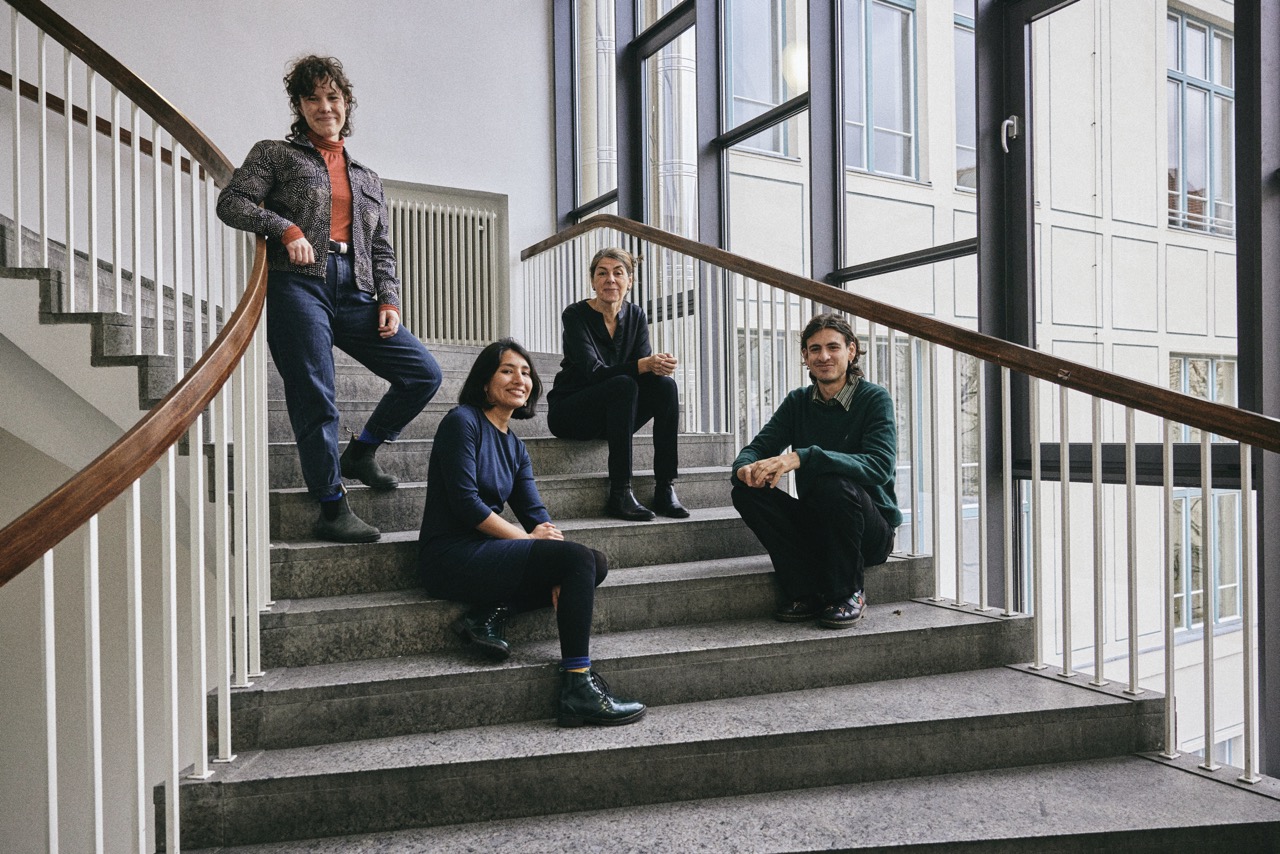
As part of the conference of the German Association for Social and Cultural Anthropology (GASCA) on “Un/Commoning Anthropology“, held at the University of Cologne from 29 September to 2 October 2025, the Planetary Healing Research Group hosted a panel on “Commoning as a Healing Practice? Potentials, Challenges, and Promises”. The panel was chaired by Eveline Dürr, principal investigator of the DFG funded Reinhart Koselleck-Project Planetary Healing, and Valeska Díaz Soto, postdoctoral researcher in the project (both Ludwig-Maximilians-Universität München LMU). The panel explored Indigenous practices of healing as commoning in an effort to address planetary crises. This emphasised the synergies of healing and commoning, as both are relational practices which can link different scales from the individual and collective to planetary scales. The panel invited contributions which focused on the potential of healing practices in re-configuring human-environment relations and enabling socio-ecological transformations.
In the first session of the panel, papers from Laura Kemmer (University of São Paulo), Frauke Zabel (Akademie der Bildenden Künste Wien), Karla García (LMU Munich), and Meret Haack (LMU Munich) discussed case studies from Latin America in which local practices of knowledge co-production and sharing were central to work towards ecological transformation.
Frauke Zabel and her co-author started the panel with insights into their work of developing a critical art-pedagogical framework through the project “Atlas Brasiliensis” to explore healing as a collective practice using drawings as source material. Meret Haack shared insights from her doctoral work in Chile on ecological transformative imaginaries in the context of the Chilean constitutional process.
Then, Karla García explored the Rights of Nature framework in Ecuador, especially in the context of restoration and how ancestral practices and knowledge systems can restore fragile ecosystems.
For the second session of the panel, the Planetary Healing Research Group collaborated with the ERC Rewilding the Anthropocene Research Group with principal investigator Michael Bollig (University of Cologne) and postdoctoral researcher Léa Lacan (University of Cologne). In this joint session, Markos Panayiotou (LMU Munich), Sarah Mund (LMU Munich and University of Cologne), Elisabeth Luggauer (Humboldt University Berlin), and Meike Melles (Institute of Ethnology, Czech Academy of Sciences) discussed case studies from the Americas and Europe. Strengthening discussions among different research groups, this panel session focused on how human-environment relations can be transformed – through approaches of commoning, healing or rewilding.
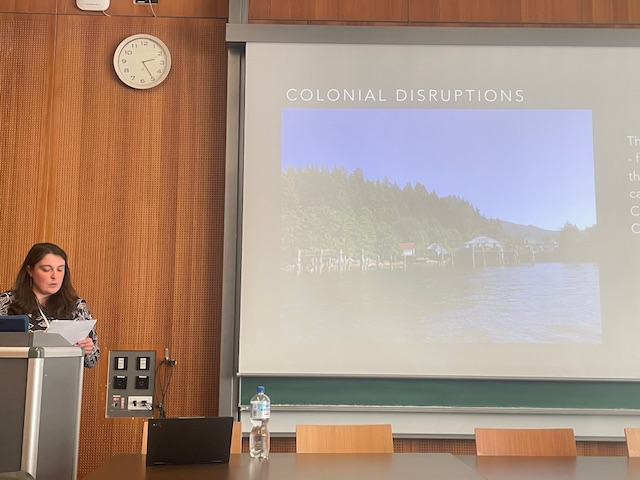
Markos Panayiotou shared insights from his research with Amazonian healers which underlined healing as a multispecies effort. Sarah Mund explored the synergies and challenges of the concepts commoning and healing through examining human-environment relations in an Indigenous territory in Canada. Then, Elisabeth Luggauer invited the panel audience to rethink urban nature as commons for multispecies city dwellers through a tiny forest project in Berlin. In a final contribution, Meike Melles explored the impacts of fungal pathogens in soils in Spain and how farmers re-envision the area as multispecies commoning. The packed conference room emphasised the scholarly interest in approaches to rethink human-environment relations.
All contributions inspired discussions on how human-environment relationships can be understood and transformed. Central questions included what the concept of healing offers to conservation projects and how it differs from other approaches such as rewilding and restoring. Here, the transformative and future-oriented potential of healing approaches emerged as a key aspect. This included how healing of human-environment relations as practice can differ in accord to the specific contexts. Panel participants also discussed how to avoid romantizations of healing and especially Indigenous practices of healing. This included a critical examination of the idea that Indigenous peoples could heal human-environment relationships, as sometimes presented and expected – for instance in the context of Indigenous tourism. The discussion emphasized the need to critically question such narratives through decolonial research practices. We are looking forward to the next GASCA conference, which will take place in Hamburg in 2027.
Cite as: Mund, Sarah, and Haack, Meret (2025). ‘Commoning as a Healing Practice? Potentials, Challenges, and Promises’, Planetary Healing Blog, url: https://www.planetaryhealing.gwi.uni-muenchen.de/commoning-as-a-healing-practice-potentials-challenges-and-promises/